Real-time fraud risk scoring and explainable risk data
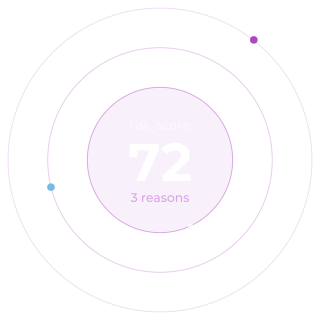
minFraud® scores transactions, account creations, and logins in real time, combining machine learning, IP intelligence, device data, identity signals, and payment context. Risk score reasons show your team why risk is elevated, not just whether a transaction crossed a threshold, so you can decide faster and explain every decision.
Common fraud and risk use cases
minFraud can be used as a primary fraud decisioning API, a manual review signal layer, or a source of structured risk data for internal fraud models.

Checkout fraud
Score card-not-present transactions, route risky orders to review, and reduce chargeback exposure.

Account creation abuse
Detect fake signups, multi-accounting, and suspicious new-user patterns before they create downstream losses.

Login and account takeover
Use IP, device, identity, and geography context to flag risky login attempts or anomalous account activity.

Promo and incentive abuse
Identify repeated use of emails, devices, payment attributes, IP infrastructure, and address patterns across accounts.

Platform and marketplace risk
Enrich platform risk systems with real-time scoring, identity signals, and explainable risk reasons.

Model enrichment
Use scores, component signals, IP risk, and risk reasons as inputs for internal ML, rules, and analyst workflows.
Example transaction response
Illustrative summary of a minFraud Factors response. Six named risk reasons explain what raised and lowered the score.
| Field | Value | What it means |
|---|---|---|
| ip_address.anonymizer.residential.confidence | 85 | Actively probed residential proxy network, 85% confidence |
| email.first_seen | 2026-07-24 | Address first seen on the minFraud network, which raised the score |
| credit_card.is_virtual | true | Virtual card, no physical card issued |
| risk_score_reasons | 6 reasons | Explanations for what raised or lowered the score |
{
  "risk_score": 72,
  "ip_address": {
    "risk": 68.4,
    "anonymizer": {
      "residential": {
        "confidence": 85,
        "network_last_seen": "2026-07-23",
        "provider_name": "quickshift"
      }
    }
  },
  "email": {
    "first_seen": "2026-07-24",
    "is_disposable": false,
    "is_high_risk": false
  },
  "credit_card": {
    "is_virtual": true,
    "is_prepaid": false
  },
  "risk_score_reasons": [
    {
      "multiplier": 2.9,
      "reasons": [
        {
          "code": "IP_ACTIVITY",
          "reason": "The activity of the IP address in the minFraud network raised the overall risk score"
        }
      ]
    },
    {
      "multiplier": 1.8,
      "reasons": [
        {
          "code": "EMAIL_FIRST_SEEN",
          "reason": "The email address being seen for the first time in the minFraud network raised the overall risk score"
        }
      ]
    },
    {
      "multiplier": 1.6,
      "reasons": [
        {
          "code": "EMAIL_ACTIVITY",
          "reason": "minFraud network activity of the email address raised the overall risk score"
        }
      ]
    },
    {
      "multiplier": 1.4,
      "reasons": [
        {
          "code": "ISSUER_ID_NUMBER_COUNTRY_MISMATCH",
          "reason": "The mismatch between IP, billing, shipping and IIN country raised the overall risk score"
        }
      ]
    },
    {
      "multiplier": 0.8,
      "reasons": [
        {
          "code": "ORDER_AMOUNT",
          "reason": "The order amount lowered the overall risk score"
        }
      ]
    },
    {
      "multiplier": 0.7,
      "reasons": [
        {
          "code": "PHONE_ACTIVITY",
          "reason": "minFraud network activity of the phone number lowered the overall risk score"
        }
      ]
    }
  ]
}
Signals that help explain fraud decisions
The value of fraud data is not just whether it blocks a transaction. It is whether your team can understand what changed, why risk is elevated, and which signals should influence the next action.
| Signal group | Example fields | Decisioning value |
|---|---|---|
| Risk score and reasons |
risk_score
risk_score_reasons[].multiplier
risk_score_reasons[].reasons[].code
|
Prioritize accept, reject, step-up, or manual review decisions while giving analysts a clearer explanation of model output. Typically the highest value set of outputs, but dependent on your traffic. |
| IP and network risk |
ip_address.risk
ip_address.anonymizer.is_anonymous_vpn
ip_address.anonymizer.residential.confidence
ip_address.anonymizer.residential.network_last_seen
ip_address.anonymizer.residential.provider_name
|
Identify risky infrastructure and proxy/VPN use, including actively probed residential proxy networks with confidence, recency, and provider name. |
| Email and identity |
email.is_high_risk
email.first_seen
email.is_disposable
email.domain.risk
|
Assess whether the buyer identity appears established, disposable, newly created, or associated with risky activity across the minFraud network. |
| Phone intelligence |
billing_phone.is_voip
billing_phone.matches_postal
billing_phone.number_type
billing_phone.network_operator
|
Check for VoIP numbers, postal mismatches, and phone characteristics that add risk context. |
| Device intelligence |
device.id
device.confidence
device.last_seen
|
Detect repeated device use across accounts, transactions, and risky behavior patterns. |
| Payment and address context |
credit_card.is_virtual
credit_card.is_prepaid
billing_address.distance_to_ip_location
shipping_address.is_high_risk
|
Spot non-physical and prepaid cards, billing far from the IP location, and shipping addresses with a risky network history. |
Fraud analysts investigate signals, not just scores
A risk score helps automate decisioning, but the explanation behind the score helps teams investigate suspicious activity, tune rules, monitor performance shifts, and communicate why a transaction was routed for review. Reasons explain scores that were lowered as well as raised.
The activity of the IP address in the minFraud network raised the overall risk score
The email address being seen for the first time in the minFraud network raised the overall risk score
minFraud network activity of the email address raised the overall risk score
The mismatch between IP, billing, shipping and IIN country raised the overall risk score
The order amount lowered the overall risk score
minFraud network activity of the phone number lowered the overall risk score
Recommended starting points
The right minFraud plan depends on how much context, explainability, and workflow support your team needs. A full plan comparison can be found on the pricing page.
Start right away with minFraud Score, Insights, or Factors
Evaluate quickly with pay-as-you-go API access, starting at $0.005 per query with minFraud Score. Choose Insights if you need supporting data for manual review and rule tuning; choose Factors if risk score reasons and explainability matter to your workflow.
- Pay-as-you-go, no minimums or commitments
- Free trial available
- Compare all three plans on the pricing page
Building a larger fraud program?
For higher volumes, dedicated fraud teams, platform risk needs, or internal models that require richer field mapping, talk to our team before you integrate.
Our team can help with:
- Volume pricing and procurement support
- Workflow mapping for checkout, signup, login, or platform risk
- Plan guidance across Score, Insights, and Factors
- Reporting fraud and false positives feedback to continuously improve your risk scoring
Want the full API reference?
The developer portal covers inputs and outputs, integration paths, client libraries, and the complete API documentation.
Need help choosing the right fraud path?
Use self-serve pricing when you need a fast test. Talk to sales when you need volume pricing, batch testing, platform risk support, or help mapping minFraud signals into your fraud workflow.